Showing posts with label itnews. Show all posts

Friday, May 13, 2011

Facebook Secretly hired a PR organisation to asperse Google

The famous Social Networking site Facebook caught secretly hiring top Public Relations Organisation to implant negative stories about the Internet Search Gaint Google Inc.


PR firm Burson-Marsteller, got captured in a scandal for running a secret anti-Google asperse campaign on behalf of Social Networking site Facebook,

The Evidence – that damage relations between the two giants, that have already bitter rivals – came to light in leaked emails late on wenesday. Facebook later admitted that it had hired Burson-Marsteller to the Daily Beast.

Burson gave a statement yesterday faulting the Facebook. The statement said Facebook insisted on being kept anonymous, and that Burson should not have gone along with that request.


Paul Cordasco, a spokesman for Burson-Marsteller, told the Guardian yesterday that the assignment was not at all standard operating procedure and was against the company's policies.

Google refused to comment.

Wednesday, May 11, 2011

Symantec says Facebook apps leak personal data

Security company Symantec claims Facebook application coding error may allow third parties to access users' private details...

Facebook applications may leak users' private data to third parties, including advertisers, according to researchers at security giant Symantec.

The social network site allows third party applications, the most popular of which are games, to run inside an iFrame, a partition within a web page that allows it to run code from an external site.

Symantec claims that due to a coding error, Facebook's iFrame applications leak 'access tokens' to third parties such as advertisers or web analytics providers, granting them permission to access users' photos, messages and personal data.

"We estimate that as of April 2011, close to 100,000 applications were enabling this leakage," wrote Symantec research Nishant Doshi in a company blog post "We estimate that over the years, hundreds of thousands of applications may have inadvertently leaked millions of access tokens to third parties."

The company believes that those parties may not have realised that they could access that data.

Symantec has informed the social networking giant of the issue, it says. "Facebook notified us of changes on their end to prevent these tokens from getting leaked." It recommends that Facebook users change their passwords.

It is not the first time Facebook has been accused of inadvertantly leaking users' private data. In October last year, two Facebook users sued the company, alleging that the 'referrer headers' that tell advertisers when a user has clicked on an ad contain private data about that user's browsing history.

Facebook denied the charges, arguing that there had been no material damage as a result of the practice. A similar suit has since been launched against LinkedIn, the professional social network popular in the IT industry.

Read more at :http://www.information-age.com/channels/security-and-continuity/news/1623178/facebook-apps-leak-personal-data-says-symantec.thtml

Google Chrome OS laptop rentals for $20 a month


Google is set to unveil a Chrome laptop “student package” tomorrow at its I/O developer conference for $20 a month, an unnamed senior Google executive tells Forbes.

If true, the move has the potential to completely reshape the way consumers adopt computers, and it will also serve as a not-so-subtle Trojan horse for Google’s online offerings.

The $20 monthly fee will cover both hardware and online services for the laptops, which run Google’s web-centric Chrome OS software, the executive said. It will likely serve as a precursor to an enterprise Chrome laptop offering, wherein businesses pay a slight premium over their $50 annual fee for Google Apps (the company’s web-based Microsoft Office competitor suite).

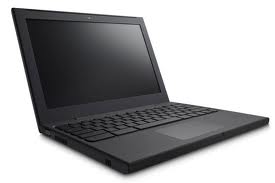
The Chrome laptops will likely feature the same mobile broadband capabilities as the CR-48. That computer shipped with built-in 3G access and included 100 megabytes of monthly internet free for two years. You could also opt for daily unlimited internet for $10, 1 gigabyte of mobile internet for $20 a month, 3 GB for $35 a month, and 5 GB for $50 a month.

Aiming the Chrome laptop subscriptions at students seems like a good choice at first glance. After all, paying $20 a month for a computer beats spending $600 or more for a full-fledged laptop. But most students would have a hard time relying solely on the Chrome laptops, since they won’t have access to key Windows and Mac software that some courses may require. Like netbooks, the Chrome laptops could serve as secondary machines — assuming they’re light enough.

Google will also need to offer students something far better than its CR-48 laptop, which was heavy and had one of the worst trackpads ever forced upon a computer.

Reports of a Chrome laptop subscription plan go back a few weeks, when Neowin heard pretty much the same information Forbes did today from a “reliable source.” That report also noted that Google will upgrade the Chrome laptop hardware and offer hardware replacements for the life of the subscription

Read more at http://venturebeat.com/2011/05/10/chrome-os-laptop-rentals/

Friday, February 18, 2011

Microsoft affirms Windows Zero Day Vulnerability


Microsoft confirmed Wednesday that a previously unknown heap buffer overflow vulnerability can affect the browser service module in Windows.

The vulnerability was first disclosed on Monday, in a Valentine's Day gift to Microsoft, when a security researcher released details and proof-of-concept exploit code.

The server message block (SMB) vulnerability exists "inside an error-reporting function of the CIFS (common Internet file system) browser service module," said Matt Oh, a security researcher at Microsoft, in a blog post.

Recent research reveals the common characteristics of virtualization success, what barriers companies face, and how to get the most from your virtualization efforts.

"The State of Enterprise Efficiency in the Virtual Era"

Microsoft didn't receive any advance notification of the vulnerability. "Luckily, the [proof of concept] was not fully weaponized -- that is, it was not designed to achieve remote code execution, just a denial of service -- although it has been reported as being a remote code execution vulnerability," said Oh.

Security vulnerability information service Vupen rates the bug as "critical," noting that it could be used to not just create a denial of service, but also to remotely run exploit code on a computer.

But despite Vupen's assessment, the bug may not be remotely exploitable. For starters, the security researcher who disclosed the flaw, Cupidon-3005 (French for cupid), rated the risk of remote exploitability as unlikely. Likewise, security researchers at Microsoft said they haven't been able to exploit the bug remotely. That's because the attack works by joining multiple strings of data, yet an attacker can't control where the data ends up, which makes injecting exploit code -- at least theoretically -- not possible.

"Our conclusion is that the part of the string that the attacker can control will always end up inside the allocated buffer, and the part the attacker can't control is in the part that overflows the buffer," said Oh. "As a result, we don't (yet) see how [remote code execution] can happen."

While the exploit likely only affects local network segments, "all versions of Windows are vulnerable, although the issue is more likely to affect server systems running as the Primary Domain Controller (PDC)," said Mark Wodrich, a security software engineer at Microsoft, in a blog post. "In environments following best practices, the browser protocol should be blocked at the edge firewalls, thus limiting attacks to the local network."

Blocking the browser protocol requires blocking or filtering UDP and TCP ports 138, 139, and 445.


Thursday, January 13, 2011

Google maps 5 offers 3D vector maps, offline caching


Google's Andy Rubin gave attendees of the D: Dive Into Mobile event, as well as the entire internet, a look at the new Google Maps software while demonstrating a Motorola prototype tablet running a development version of Android Honeycomb. (Check out the video at the bottom of this story for a demonstration of both.)

The fifth iteration of Google Maps for Mobile will feature an overhauled visual style that is based on vector graphics rather than the flat, bitmap images of the current version. The upshot of this change in graphic architecture is that maps now require much less storage space and less bandwidth to download.

Overall performance of the Google Maps software should be improved, but more importantly, lighter map data requirements makes possible the offline caching of routes. This means that once a route is locked in, users will not need to maintain an internet connection for the duration of the trip, which will make Google Maps navigation much more useful for those of us who stray off of the cellular grid occasionally. Of course, altering the route or choosing a new destination will still require a connection, but small re-routes for a missed turn or two may not.

The other advantage of the vector map data is that Google Maps will now offer 3D building data for over 100 cities. These 3D landmarks can be tilted, rotated, panned and zoomed with multi-touch controls. It's a neat feature that may be useful for users who prefer to navigate visually, but we've always felt that 3D landmarks on maps are more eye candy than a useful navigation tool.

Google Maps for Mobile 5 will be available for download in the coming days. However, while compatible phones will benefit from the improved performance and possibly map data caching, features such as advanced multi-touch controls and 3D rendering may be restricted to handsets with the hardware to support them.

Sunday, January 24, 2010

Fixing a Hole in the Web

It could take a year to patch up a flaw to a key Internet protocol.

Late last week, the Internet Engineering Task Force (IETF) approved a fix to the protocol that guards most sensitive transactions and communications online. But experts expect it to take a year for the fix to be fully applied.


The patch repairs a flaw in the protocol that encrypts sensitive communications, including most banking and credit-card transactions. It repairs the Transport Layer Security (TLS) protocol, which has superseded the Secure Socket Layer (SSL) protocol. TLS is built into Web browsers and Web servers and protects high-value information.

The current flaw, discovered by Marsh Ray and Steve Dispensa of a Kansas-based authentication company called Phone Factor, gives an attacker the ability to hijack the first moment of the encrypted conversation between a Web browser and a Web server. This allows the attacker to add a command of his own, which could be as serious as an order to withdraw money from the victim's account. One security researcher demonstrated the attack on Twitter, showing that the flaw could be used to command the server to reveal a user's password.

"The reason it's striking is that it's actually a TLS error, or at least arguably so," says Eric Rescorla, a security consultant at a company called RTFM and one of the authors of the draft fix to the protocol. Rescorla says the flaw shows how difficult it actually is to design security protocols for the Internet.

To make use of the flaw, an attacker would first have to set up a "man in the middle attack" and intercept traffic between the client and the server. This might be done by hijacking a particular server on the Internet, for example.

Sunday, May 24, 2009

The Insecure Enterprise

With cyber criminals offering ‘fraud as a service’ and malware factories churning out malware designed to steal information, the threat perception for Indian enterprises has escalated to a new level, as organized crime syndicates take over from script kiddies

By Srikanth RP More from this author

  • In February 2009, local newspapers reported that the Ministry of External Affairs was examining a security breach on its computer network, after some computers were found to be infected with spyware, which was sending copies of information to an external e-mail address
  • In March 2009, Websense Security Labs discovered that the official website of Rajshri Productions, India, had been compromised and was infecting the
  • machines of site visitors with malicious code
n December 2006, Kingfisher Airlines was hit by an online e-ticket fraud that cost the airline Rs 17 crore
CERT-In, the Indian Computer Emergency Response Team’s website, reveals that a total of 4,475 Indian websites were defaced in the year 2008
  • In August 2007, the website of one of India’s leading banks, Bank of India, was hacked, and was found to be distributing malware and Trojans to visitors. In the same month, Websense Security Labs discovered that the official site for Syndicate Bank was compromised with a malicious script

What do the above incidents tell us? The fact that even after following the best security mechanisms, all a hacker has to do is to find a single open door or a minor exploit for breaching a network. KK Mookhey, Principal Consultant, Network Intelligence India, rightly sums this up as an asymmetric warfare: “The attacker has to find only one loophole, while the defense has to plug all loopholes.” With multiple threats ranging from Zero day exploits, website vulnerabilities, unpatched software and an ever-growing insider threat, enterprises cannot afford to blink their eyes even for a moment.

Clearly, even as the Internet has leveled the playing field for Indian enterprises, it has also exposed the vulnerabilities of Indian enterprises to global hackers who do not differentiate between boundaries. For example, the Bank of India hacking incident was traced to an ISP in Russia.

Rogers' HTC Dream and Magic aren't "Google phones," have Exchange support


Remember how we found out that there's a difference between the Google-branded Android firmware and its HTC-modified equivalent, and the latter isn't allowed to feature the silkscreened Google logo? The HTC version is way cooler on account of its Exchange ActiveSync support and the much-improved camera app; the only downside is that you can't flaunt that logo on the case, which -- let's be honest -- is totally meaningless to an end user (unless you're some raving Google fanboy / fangirl, and in that case, no amount of awesome customization is going to sway you). Anyhow, it's up to individual carriers to decide which versions of the devices they wish to launch, and Rogers customers will be excited to know that they're getting the logo-free HTC builds. That makes Canadian Dreams and Magics a whole hell of a lot more useful to business users than the G1s down in the States, and going forward, this is an issue T-Mobile probably wants to think about -- as long as the base Android code doesn't license ActiveSync, anyway.

Saturday, May 23, 2009

Satyam has 10,000 surplus staff: Tech Mahindra

NEW DELHI: About 10,000 employees, a quarter of Satyam Computer Services’ total headcount,
are surplus, and the company was looking for “the least painful way” to deal with the situation,
the CEO of its new owner, Tech Mahindra, said on Friday.Among the options the new Satyam
management is toying with include across-the-board salary cuts, virtual benching of employees,
and sending some of them on a sabbatical or to work with NGOs, as it looks to cut costs and
regain its reputation in the global markets.“We are trying to find the easiest and least painful way,”
Tech Mahindra MD and CEO Vineet Nayyar said after a company board meeting.
Satyam, one of the pioneers of technology outsourcing, shocked corporate India in January when its founder B Ramalinga Raju confessed that he had been tampering with the company’s accounts for years. The government then ordered a high-level probe, sacked the company board, and appointed a crack team of independent directors.

Tech Mahindra, the IT arm of the $6.7-billion Mahindra Group, bought Satyam at an open auction by agreeing to pay Rs 2,889 crore for a 51% stake. The acquisition has been approved by India’s Company Law Board and Germany’s anti-trust body. On the issue of the $1-billion fraud and forgery lawsuit filed against Satyam by the UK-based Upaid, Mr Nayyar said the firm would prefer an out-of-court settlement as opposed to a long-term litigation.

“It is in their (Upaid’s) interest and our interest, but there has to be a meeting of minds,” he added.

The Satyam board meeting, which Mr Nayyar attended as a special invitee, was held here to review the firm’s progress and to get an update on the restatement of accounts by its new auditors KPMG and Deloitte.

The two auditing firms are restating Satyam’s accounts for the past six years. “They (the auditors) will have to go back as far as possible as there are issues relating to earlier times. We hope that in the next 2-3 quarters, we will get something done,” said Kiran Karnik, chairman of the Satyam board.

Satyam is expected to see a dip in its revenues as the work being done for clients, which have cancelled their contracts, is phased out, he said.

Mr Nayyar added that Satyam, which had lost a few clients in the wake of Mr Raju’s admission, has not lost any client in the past one month.

Tech Mahindra representatives, including CEO Mr Nayyar, global operations head CP Gurnani, strategic initiatives president Sanjay Kalra and M&M’s IT sector president Ulhas N Yargop, will join the Satyam board from June 1.

Onn V2 PMP Goes for iPod Nano 2G Form Factor


According to the Danish manufacturer ONN (also Owen), the iPod Nano reached the peak of its popularity at second-gen and of course ONN wants some of that popular to resurface as it introduced the ONN V2, successor of the ONN V1, and an iPod Nano 2G wannabe. Besides the appearance, the V2 measures 82 × 42 × 6.8mm, which you must admit comes very close to being identitical with Nano 2G. The V2, though, has AVI video support, which is like the Nano 4G. On top of video support, the V2 has a built-in FM tuner and e-Book functionality. It’s probably cheap, too, but we’ll wait for the price announcement before recommending it.

No Reboot Required Ksplice uses new technology to build security updates for Linux that can be installed without restarting.

"Restart required." The words are guaranteed to bring a groan from computer users. And for busy system administrators, they are even more annoying: applying critical system updates to protect a machine against attack must be balanced with the demands of hundreds or even thousands of users. Software from a new company called Ksplice addresses this dilemma with updates that do not require a restart.

In order to install an update while a computer continues running, a software patch must be carefully structured so that it doesn't interfere with the operating system's current operations. This is a difficult and delicate process, and Ksplice addresses it by working at a different level of computer architecture. Most update technologies use the same programming language as the operating system itself. The computer has to translate these instructions into a lower-level language. Ksplice's software sidesteps this process, analyzing the changes that an update would make at a low level and implementing them using the lower level language.

The technology was developed by cofounder Jeff Arnold while he was a graduate student at MIT, and last week, it won the grand prize at the Institute's $100K Entrepreneurship Competition.

Waseem Daher, cofounder and chief operating officer, explains that the approach adopted by Ksplice saves it from restructuring instructions in a higher-level programming language on the fly. So far, Ksplice has developed its new update technology for the Linux operating system--which is commonly used to control server machines--although Daher says that the technology could work on other operating systems too.

Ksplice is intended to work for all security patches. "If you don't have a complete solution, it's basically useless," Daher says.

In tests conducted from May 2005 to May 2008, Ksplice was able to install 88 percent of Linux security updates automatically and without a reboot. The remaining updates could be installed without rebooting when a human programmer added a few lines of code.

Ksplice hopes to license its technology directly to software vendors, and then provide the human expertise needed to keep the system working. While Ksplice searches for deals with vendors, Daher says that the company will offer a subscription service to convert patches for clients so that they do not require a reboot.

Google Grabs More Geo-Data By letting developers store data on its servers, Google hopes to make the geo-Web more searchable.


On Wednesday, Google announced that it would open its servers to geographic data belonging to anyone. This means that developers will be able to quickly build a location-based Web service without having to also manage their own data server. The announcement might be good for many developers, but it's also good for Google itself: the location data will be integrated into Google's search index, making it searchable and, ultimately, capable of generating advertising revenue.

At the Where 2.0 conference in San Jose, CA, Google senior product manager, Lior Ron, introduced an application programming interface (API) for Google Maps Data. Ron explained that the product allows developers to "store custom geographic information on Google's infrastructure, relieving developers of the duty of maintaining data on an infrastructure."

In 2005, Google released an API for its Google Maps services, providing a simple way to create a custom map for a website or build "mashups" using other data sources such as Craigslist rental listings. Now, Google Maps Data API, lets developers dive deeper into the map-making process, using Google's servers to store and manage the geographical data an application or service might need.

One company that's already using the Google Maps Data API is Platial, an online atlas that lets users tag and share places of interest. Currently, Platial holds all of this user-generated geo-data on its own servers. With the new API, the data will be integrated into Google's index, says Jake Olsen, Platial's chief technology officer, providing "immediate discovery via Google Search in Maps."

Another Maps Data project, called My Tracks, was created by Google's own engineers. My Tracks runs on Android mobile phones and records the location of GPS "breadcrumbs" left by users as they walk, jog, or bike outdoors. The data is also stored on Google's servers, and people can edit and share information via Google Maps.

As real-time geographical data enters Google's database, it could provide the search engine with a hook into real-time search, says Olsen. Currently, the company indexes the Web on a rolling basis throughout the day and updates a few services, like Google News, more frequently. A real-time stream of geographical data could help Google index certain types of events more quickly. The search engine could, for instance, collect users' pictures geo-tagged at the scene of a crime or accident and include them in a news search.

One increasing concern, however, is that Google might gain access to much more geographical data than other services. This could lock out some smaller companies, and some developers might be wary about completely trusting Google with all of their data.

Another drawback for developers may be that currently the API has some service constraints. "If you run a popular site, you will hit limits," says Olsen, "whether it be rate limits or content limits." He suspects that Google will come up with a commercial licensing scheme and find a service-level agreement that makes its capabilities clearer.

In the meantime, Platial isn't giving up its databases completely. "As with any cloud-based service," says Olsen, "if that service goes down, so do you."

Are Your "Secret Questions" Too Easily Answered? Research finds that the answers to secret questions used to retrieve forgotten passwords are easily

Brian Green's experience with not-so-secret questions began when he logged on to his World of Warcraft account in March of this year and found all of his characters in their underwear. Someone had stolen the account and sold off all of his virtual equipment.

"My first thought was that I might have a keylogger on my computer," Green wrote in a description of the event. Yet his own research into the incident--and the attacker's ability to change his account passwords multiple times--led Green, who is himself a game designer, to a different conclusion: "My 'secret question' has an all-too-common answer . . . This wasn't something I considered when I filled it out way back when."

The incident bares similarities to the high-profile case involving Alaska governor and former vice-presidential candidate Sarah Palin. In September 2008, hackers used the name of the location where Palin and her husband met to gain access to her Yahoo e-mail account via the "secret question" password-recovery mechanism.

Palin and Green are not alone. In research to be presented at the IEEE Symposium on Security and Privacy this week, researchers from Microsoft and Carnegie Mellon University plan to show that the secret questions used to secure the password-reset functions of a variety of websites are woefully insecure. In a study involving 130 people, the researchers found that 28 percent of the people who knew and were trusted by the study's participants could guess the correct answers to the participant's secret questions. Even people not trusted by the participant still had a 17 percent chance of guessing the correct answer to a secret question.

"Secret questions alone are not as secure as we would like our backup authentication to be," says Stuart Schechter, a researcher with software giant Microsoft and one of the authors of the paper. "Nor are they reliable enough that their use alone is sufficient to ensure users can recover their accounts when they forget their passwords."

The least-secure questions are simple ones whose answers can be guessed with no existing knowledge of the subject, the researchers say. For example, the answers to the questions "What is your favorite town?" and "What is your favorite sports team?" were relatively easy for participants to guess. All told, 30 percent and 57 percent of the correct answers, respectively, appeared in the top-five list of guesses.

But answers that require only a little personal knowledge to guess should also be considered unsafe, the researchers warn. Of people that participants would not trust with their password, 45 percent could still answer a question about where they were born, and 40 percent could correctly give their pet's name, the researchers found.

6 ways to protect your privacy on Google


Concerned that Google knows too much about you? The company provides many ways to protect your privacy online -- you just need to find them. Here are six good ones.

1. Know your privacy rights: Use the Google Privacy Center. This site includes all of Google's privacy policies, as well as privacy best practices for each of its products and services. Although the "legalese" of privacy policies can be difficult to understand, Google's Privacy Channel offers a library of short YouTube videos with practical tips on protecting your data when using Google products and services. Try the "Google Search Privacy" and "Google Privacy Tips" series.

2. Protect your content on the services you use. Some content that Google stores for you, such as photos uploaded in Picasa Web Albums, are public by default. You can protect your privacy when you upload photos by choosing the appropriate checkbox.

Choices include "unlisted" (accessible only if you have the Web link, and not indexed by Web search engines) or private (viewable only by named users who must sign in).

Another example: You can take a Google Chat "off the record" if you don't want the instant messaging transcript stored.

In contrast, Google Latitude, which tracks your whereabouts by way of GPS-enabled cell phones, does not share your location data by default. You must authorize others to see it. Latitude stores your last known location, but not your history.

3. Turn off the suggestion feature in the Chrome browser. Chrome uses Google Suggest to try to guess which Web address you want as you type into the "Omnibox," the address bar in Chrome that doubles as a search engine query bar. It makes suggestions for where you want to go based both on popular Web sites and searches and on the text that you type in. That text is transferred to Google's servers and may be logged in some cases. The service is turned on by default.

You can turn the feature off by going to "Under the Hood" under Options and unchecking the "Use a suggestion service" box. You can also select other privacy options, including surfing in Chrome's "incognito" mode, which ensures that Web history, cookies and records of downloads are not stored on your computer when the session ends.

4. Turn off Web History. You may have turned on the Web History option, also called Personalized Search, when you first created your Google account. If so, Google may be maintaining a "personalized" search history for your use.

Google does not use this data to target ads. It uses a separate search history, stored in Google's server logs and associated with a browser cookie, for that purpose. That data is "anonymized" after nine months. But your Web History is retained forever, unless you turn it off or delete the contents.

5. Opt out of interest-based ad serving. As of March 11, Google and third parties in its AdSense network are using not just contextual information (what you're searching for) but a history of previously viewed Web pages to serve up targeted advertising. The idea is to serve up ads that are more relevant to your interests.

You can remove interest categories Google has attributed to you or add others by visiting its Ad Preferences page. You can also opt out. To make the opt-out setting permanent, however, you'll need to install a plug-in for each browser you use. It's available for IE, Firefox, Chrome and Safari.

6. Add SSL to Gmail. You can encrypt e-mails you read and create in Gmail. Your log-in data is encrypted by default by SSL encryption, but SSL is turned off when you interact with your e-mail, because it can slow performance.

You'll find the option in Settings under the General tab. Scroll to the bottom of the screen and select the "Always use https" option under the Browser Connection setting.

32GB iPhone placeholder appears at T-Mobile Austria


Take it for what it's worth (which may be nothing, quite honestly), but a bona fide "iPhone 32GB" placeholder has appeared in the 'Coming Soon' section on T-Mobile Austria's website. Generally speaking, we wouldn't give this kind of slip too much credence, but considering that a similar slip at T-Mobile Germany was accurately foretelling two years ago, we're cautiously optimistic that all those rumors of a more capacious iPhone are legitimate. We hate to remind you that loads of smoke generally leads to fire, but hey, June 8th ain't too far off anyway. Larger screen cap (of the translated-to-English site) is just past the break.

[Via AreaMobile]

Update: Seems the admin yanked the 32GB iPhone from the page -- oopsie!

Update 2: Looks like Vodafone Australia has sent out a notice that the 16GB iPhone has been deemed "End of Life" by Brightpoint, who supplies its iPhones. Are you thinking what we're thinking?

AMD: Intel-only deal struck with Apple


Advanced Micro Devices claims that Intel and Apple cut a deal in 2005 to use Intel processors only. Intel denies claim, says Apple's decision to go with Intel chips was based on merits.

The claim, made in a phone interview with Tom McCoy, AMD's senior vice president of legal affairs, earlier this week, holds that Intel has had a longstanding deal to be Apple's sole supplier of microprocessors. To date, Apple has not used an AMD central processing unit (CPU) in any of its products. Currently, only Intel CPUs populate Apple's laptop, desktop, and server lineups.

This assertion by AMD comes in the wake of the EU decision last week to fine Intel $1.45 billion for violating antitrust legislation. Last week's EU decision centered on whether Intel used illegal tactics to deny processor business to AMD at PC makers.

McCoy said that a deal was struck when Apple moved from the PowerPC (IBM-Motorola) chip architecture to the x86 (Intel-AMD) architecture. The transition was announced by Steve Jobs at the Worldwide Developers Conference in 2005.

"They made a deal when they were porting over from PowerPC to x86 as to how much Intel was willing to pay for that port. My guess is that Intel asked for and won exclusivity in return for the help that they gave Apple to port," McCoy said.

McCoy continued: "That deal will not be exclusive forever and when that exclusivity is over, I'm sure they (Apple) will choose on the merits. We'll have a chance to compete for Apple's business when Apple is ready," he said. Intel denies this allegation.

Though McCoy did not make any direct charge of illegal activity regarding such a deal, the assertion is not that far removed from charges made in the July 2005 AMD complaint against Intel. AMD, in that filing, cited Dell, among other examples of exclusive Intel deals with PC makers. "In its history, Dell has not purchased a single AMD x86 microprocessor despite acknowledging Intel shortcomings and customer clamor for AMD solutions, principally in the server sector...Dell has been and remains Intel-exclusive. According to industry reports, Intel has bought Dell's exclusivity with outright payments and favorable discriminatory pricing and service." (Note: Dell, in 2005, offered no AMD-based products, though it does today.)

Whether the deal is exclusive doesn't in itself constitute a legal argument, according to Joshua D. Wright of the George Mason University School of Law, who has written about the EU decision in a blog, "Truth on the Market." "Under Section 2 of the Sherman Act, a plaintiff must show that the exclusive dealing arrangement harmed competition in the form of higher prices, lower output, or reduced innovation," Wright said, responding to an e-mail query.

Addressing the Apple case, Wright said that by granting exclusivity or a large share of their business, "Apple and others are able to play Intel and AMD off each other to get higher rebates. These rebates are ultimately passed on to consumers in the form of lower prices. That's a critical part of the equation here. In other words, when Apple makes a decision whether or not to accept Intel's offer of higher rebates plus exclusivity versus whatever it is that AMD offers, it weighs these different aspects of competition (quality, price, rebate, exclusivity). It is making a decision on the merits of the total competitive package," he said.

Intel says the original Apple decision was, in fact, based on the merits. "Intel won the business based on the merits of its technology and product road maps, which included superb mobile processors and our 45nm Hi-k-based processor roadmap," Intel spokeswoman Claudine Mangano said in response to an e-mail query. "What has resulted from this decision is tremendous product and market innovation. If Intel technology did not perform well and our product road map was not strong, customers would go elsewhere, she said.

The transition was not trivial, according to Intel. "The decision was a large undertaking and a multiyear effort given the customer was porting to a new architecture," she said.

Apple declined to comment on this story.

Analysts agree that the transition from PowerPC to x86 was a formidable undertaking.

"Intel put a significant amount of resources into helping Apple make that transition," said Jim McGregor, chief technology strategist at In-Stat. "There are different ways you could do this. In terms of product pricing, charging for engineering resources, or maybe even--'this is our agreement to provide you with these products in exchange for the engineering,'" he said. McGregor added that AMD may not have had the wherewithal to take on the transition. "I don't know if Apple could even have gone to AMD. Because I don't know if AMD would have had the resources to do that."

Marion Morales, vice president of IDC's semiconductors research program, said Apple is fiercely independent and, generally, picks suppliers with Darwinian rigor. "Apple is notorious for not being very loyal," he said. "They are always changing suppliers around. Whoever offers the better technology," according to Morales.

"For example, they're using Samsung for the (ARM) processor that's now in the iPhone," Morales said. "But it won't surprise me when they replace that with something that's better. And when you look at the processor itself, they're designing the processor and using Samsung as a foundry (factory)," he said, underscoring the fact that Apple emphasizes internally developed technology and de-emphasizes external suppliers, even large companies like Intel and Samsung.

Morales continued. "Maybe at this point in time Apple is only using Intel. But if they had a chance to use someone else that's better, they would," he said.

The Intel-Apple relationship has had its ups and downs. Though Apple extolled the virtues of Intel's architecture after its transition to Intel in 2006 and continued this in January 2008, for example, when it introduced the MacBook Air--which, at the time, used a special Intel processor--the two companies were not so chummy in October of last year when Apple announced a refresh of its MacBooks, replete with Nvidia chipsets that displaced Intel silicon.

Apple has also acquired chip company PA-Semi, which is expected to design silicon for Apple's iPhone or other consumer electronics devices.


Apple Tablet Coming in 2010?

Apple may have turned its nose up at the netbook market, but that doesn’t mean it’s ignoring the void between its $400 iPod touch (32GB) and $1,000 MacBook. Piper Jaffray analyst Gene Munster believes Cupertino will launch a touchscreen tablet, priced in the $500 to $700 range, in the first half of 2010.

Rumors of an iPod-like tablet have been swirling for months, with some speculating that Apple is developing a large-screen iPod touch—say, a 7- to 9-inch touchscreen device—that would be large enough for HD movies and maybe a few desktop-style apps. Such a device would provide a better gaming experience than the iPod touch too.

But please don’t call it a netbook, a bargain-bin class of laptop that Apple execs have dissed as “junky.”

There’s no smoking gun in the latest report, but it does appear as though Apple is up to something. As reported by CNN, Munster’s sleuthing led him to conclude that an Apple tablet is only months away.

The signs include: Apple’s recent interest in chip designers, including the company’s acquisition of low-power chipmaker PA Semi a year ago; Apple’s efforts to add multi-touch features to its core products, including iPods, iPhones, and Macs; and the quintessentially Apple need to differentiate itself in an established market. (Think iPods, iPhones, Macs, etc.)

Admittedly, Munster’s evidence is pretty slim. But when combined with other reports, including one from the Chinese-language Commercial Times that says Taiwan-based Wintek will soon supply touch panels for an upcoming Apple subnote, an touchscreen tablet seems very possible.

One thing’s for sure: An Apple tablet, subnote, or whatever you want to call it, won’t copy the successful-if-unspectacular netbook formula of a shrunken laptop with a cramped keyboard and tiny screen.

There’s certainly a market for a portable media player larger than the iPod touch, iPhone, or other smart phones. But what would people pay for such a device? If Apple’s sweet spot is $700, the alleged tablet would need some fairly robust wireless communications and productivity tools too.

Apple would be foolish to ignore the growing netbook market, which is attracting more and more potential laptop buyers. Odds are, it won’t.

Samsung SCH-M830 Windows Mobile Smartphone Gets WiMax


Running on the Windows Mobile 6.1 Professional OS, Samsung and SK Telecom has start selling its new SCH-M830 pda phone in Korea with WiMax support. The WiMax will be used with SK Telecom WiBro services, giving a stable wireless data connection speed of up to 3Mbps. The M830 also has a similar specs as the T*Omnia, comes with a 3.3-inch WVGA full touch screen, 2GB memory, bluetooth, WiFi, microSD card slot and a 3 megapixel camera.

BlackBerry Storm 2: the official unofficial hands-on


We've been bumping into the new BlackBerry Storm 2 for quite a while now on the so-called "information superhighway," but we've finally had a chance to escalate those encounters and spend a few sweet moments with a live unit in the flesh. First off, let's confirm the huge news: RIM's abandoned the original Storm's SurePress click-screen and gone with a traditional fixed capacitive display for the sequel. It's over, guys. Unfortunately, the Verizon-branded dual-mode GSM / CDMA unit that we played with has a bug preventing us from getting past the license screen so we couldn't dive deep into the OS (and yeah, we tried scrolling to the bottom of the agreement -- no dice), but we can tell you what we do know: the Storm 2's sleeker style and more heft combined with the newly-stable screen collaborate to make everything feel a wee bit higher end than the original. Follow the break for more impressions
The display is a capacitive number, and it's definitely not SurePress, at least in the traditional sense; there's nary a click to be found. In fact, it behaves rather like the iPhone's screen as far as scrolling and even texture of the surface is concerned. We can't speak to the tech inside, but it does pack a 3.2 megapixel camera with auto focus, a 3.5 mm headset jack, typical USB charger, and run of the mill soft keys on the sides of the handset. Across the bottom, the Storm's keys have been replaced with four softkeys on the display proper for call, end, back, and a BlackBerry key. The top has both the power and mute keys with the entire thing wrapped lovingly in plastics with some metal trim on the edges and a metal battery cover.


We'd heard buzz of haptic support -- and while it is possible it is somewhere in there, we can't get at it, so we'll leave that one up in the air for now. We'll leave the device with the heroes and hope we get another chance with it if they can get into the OS for a tour. Meanwhile, follow on for the gallery and a quick video showing off some Verizon branding right after the break. Of course, if you have any questions, drop them in the post and we'll do our level best to get you an answer -- or at least try to lie in a convincing fashion